
The Chicken Carcass Incident
Chanson douceA discarded meal becomes a charged symbol of scarcity, control, and Louise’s capacity to turn domestic thrift into a threat.
increasing Bearing strength in each event
 decreasing
Bearing strength in each eventdecreasingA Habit of Saving
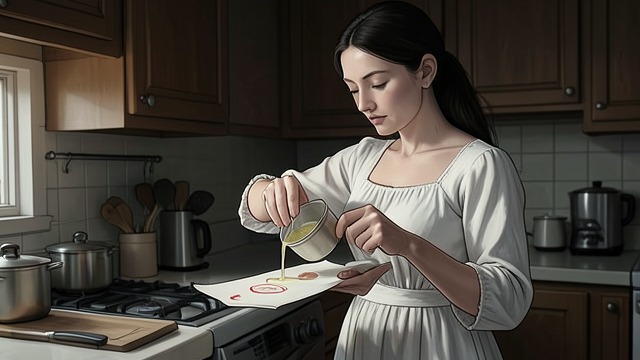
Nothing Should Be Wasted
Small leftovers preserved
Louise stores tiny portions of food, scrapes containers, and studies discount leaflets. At first the Massés find her thrift amusing and touching.
Scarcity survives comfort
The family’s relative security does not erase Louise’s fear of waste. Her habits carry the history of deprivation into a household that can replace what it throws away.
A New Rule
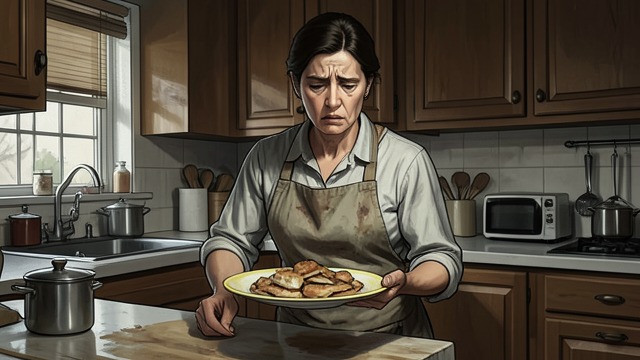
Myriam Sets a Limit
Safety over frugality
Myriam tells Louise not to give the children expired food, even if it is only a day past its date. She insists that the rule is not open to negotiation.
Authority becomes visible
A household disagreement exposes the difference between Louise’s role in managing food and Myriam’s authority to decide what the children may eat. The conflict over leftovers is also a conflict over who governs domestic life.
The Discarded Chicken
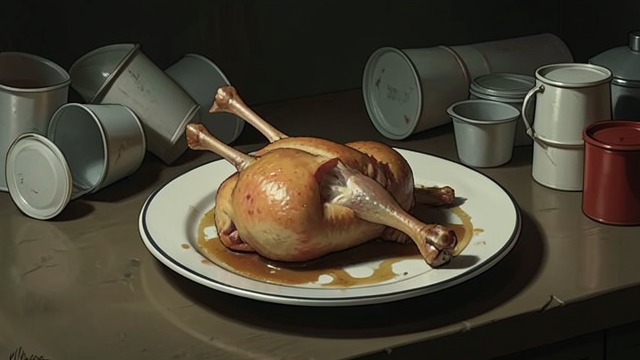
A Meal Thrown Away
Myriam rejects the meat
Myriam disposes of a chicken she believes unsafe for the children. She remembers the smell and the greasy dish as she empties it into the garbage.
Two meanings of waste
To Myriam the decision is sensible protection; to Louise, food discarded while she faces financial hardship may represent an affront. Neither communicates the meaning the act carries for the other.
The Cleaned Skeleton
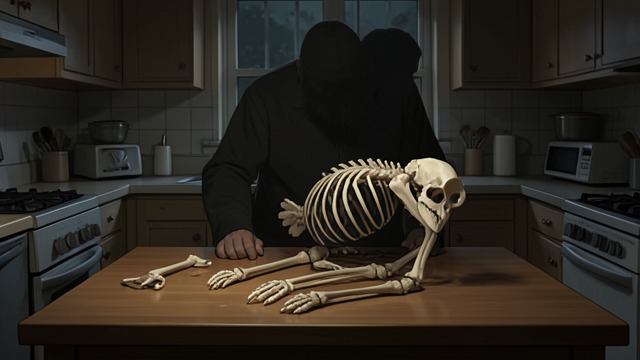
A Disturbing Display
The carcass reappears
Myriam finds the chicken stripped clean, washed, and placed on the children’s table. Its neatness makes the object more unsettling than an ordinary leftover.
Fear replaces amusement
She imagines the skeleton as a deliberate, almost ritual warning. The gesture transforms Louise’s thrift from a quirky habit into evidence of anger that the employers can no longer comfortably dismiss.
Children at the Table
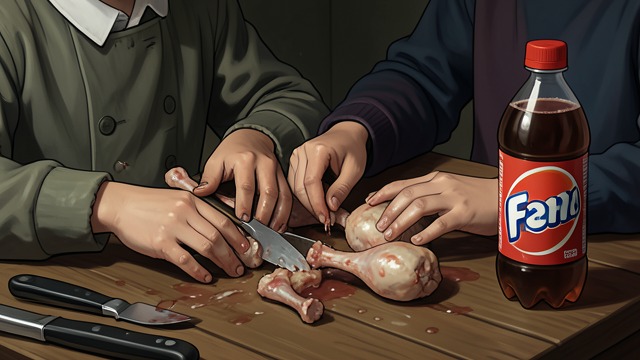
A Lesson in Eating
A strange game
Mila later explains that Louise let the children scrape the chicken bones with their fingers and drink Fanta so they would not choke. Louise presented it as a game with rules and rewards.
Tenderness and menace coexist
The episode joins playful intimacy to Myriam’s perception of vengeance. Its ambiguity matters: the same act can be remembered as a game by a child and interpreted as a threat by an adult.
The months after Louise joins the household
Several months after her illness
The morning before Myriam finds the carcass
Late that evening
Earlier that evening
